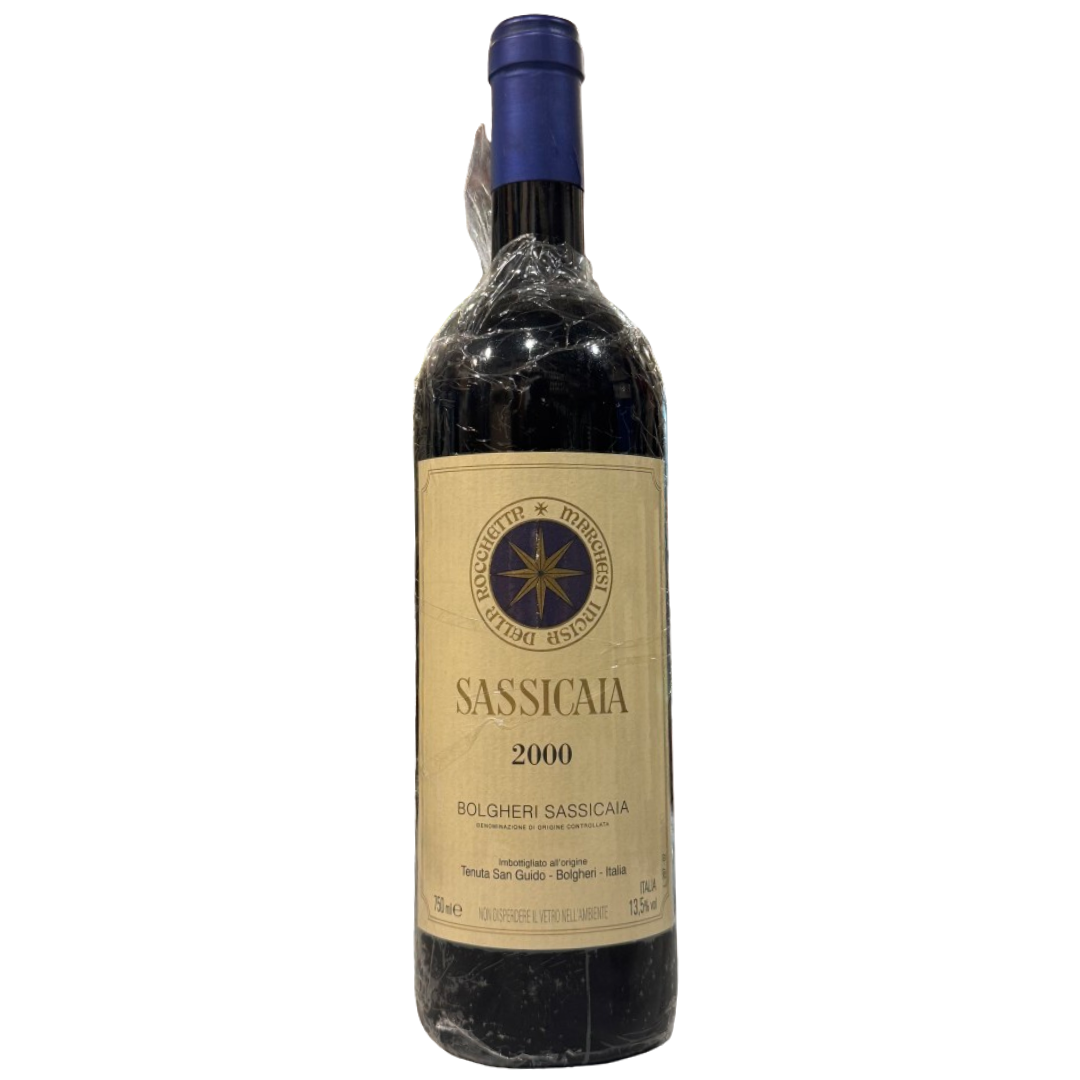
Description
History
A warm summer and mild winter resulted in early ripening and concentrated grapes. The winemakers crafted a harmonious blend of Cabernet Sauvignon and Cabernet Franc, delivering the classic Bolgheri profile with a distinctive character.
Grape varieties
About 85% Cabernet Sauvignon and 15% Cabernet Franc .
Vinification
14–18 days maceration during fermentation, followed by malolactic fermentation and 24 months of ageing in new and used barriques to marry structure and finesse .
Alcohol content
12% (minimum for the DOC).
Tasting notes
Bright, deep ruby. Complex aromas of black cherry, cassis, blackberry, spice, tobacco, cedar, vanilla, and minerals . On the palate it’s opulent yet balanced, with silky tannins, lively acidity, and a savory, enduring finish .
Food pairings
Pairs beautifully with game, braised meats, T-bone steak, and aged cheeses. With its structure and pedigree, it can continue developing through 2035 .
Brand
Tenuta San Guido
In the early twenties in Italy, Mario Incisa della Rocchetta, a lover of French wines and in particular of the great structured red wines of Bordeaux, realized that the territory of the Tyrrhenian coast of the Bolgheri area had many geographical, climate and terrain similarities with the Graves area of Bordeaux. "Graves" in fact means gravel, precisely because of the stony composition of the soils in the French area, just like "Sassicaia" within the San Guido estate they own. So he began to think of a Bordeaux blend produced in that area and began experimenting in the early 1920s, achieving good results, even if the wine was not yet aged for long in oak barrels. In fact, from 1948 to 1967, the Sassicaia remained for strictly private use and consumption on the estate. However, every year, a few cases of wine were left to age in the Castiglioncello cellar. Tasting it, the marquis began to realize that the old vintages, over time, improved significantly, even transforming their defects into virtues. Strong and enthusiastic about these considerations, he invested himself in winemaking techniques and in 1968 the product was placed on the market for the first time, with a welcome worthy of a Bordeaux Premier Cru. In the following years the premises were implemented with the creation of a temperature-controlled cellar, the acquisition of steel vats for fermentation and French oak barriques intended for the elevation and aging of the wines